




Store
The Idea Behind Azalay Chora

Σεπ
Azalay Chora began with a simple idea: a home should feel collected, not decorated.
Behind Azalay are George and Christos — two people who came to interiors from different directions, long before there was a store in Chora.
George comes from hospitality. Years of creating, managing and constantly improving places for people to stay made him slightly obsessed with the details of a space — how it feels when you first enter, how people move through it, what they remember and what makes them want to come back.
Christos came from the other side of the room — quite literally.
He has spent more than 25 years in furniture and interiors in Athens. We’ll leave the exact number there for everyone’s benefit.
Through his furniture store and his work on hospitality and residential projects, he has spent those years rethinking spaces: choosing furniture, working with proportions and materials, designing layouts and turning rooms that simply existed into places that actually felt considered.
Long before Azalay, the two worlds had already met.
Christos worked on George’s hospitality properties, redesigning spaces and shaping much of their interiors. George approached them from the perspective of the guest; Christos from the perspective of design, furniture and how a space comes together.
There were discussions. There were changes. There were probably pieces of furniture moved more times than strictly necessary.
Somewhere along the way, a shared language developed.
Two Perspectives, One Store
That relationship became the foundation for Azalay Chora.
George looks at a piece and often thinks about the experience around it. Where would it sit? How would someone use it? How would it change the feeling of a room?
Christos brings the eye of someone who has been working with furniture and interiors for decades — understanding scale, proportion, materials and the difference between something that looks good on its own and something that actually works within a space.
And no, they don’t always agree.
That’s part of the point.
Azalay exists somewhere between those two perspectives: the experience of a space and the objects that shape it.
We don’t select pieces simply because they’re fashionable, nor because they fit neatly into a particular style. We choose things that we would genuinely use, place in a project or want to live with ourselves.
Why Tinos?
Tinos was a natural place for that idea to take physical form.
George’s work in hospitality had already created a close relationship with the island and its spaces, while many of the projects George and Christos worked on together became an opportunity to experiment with how contemporary furniture and objects could exist within Cycladic architecture.
Tinos itself has inevitably influenced the way we see design.
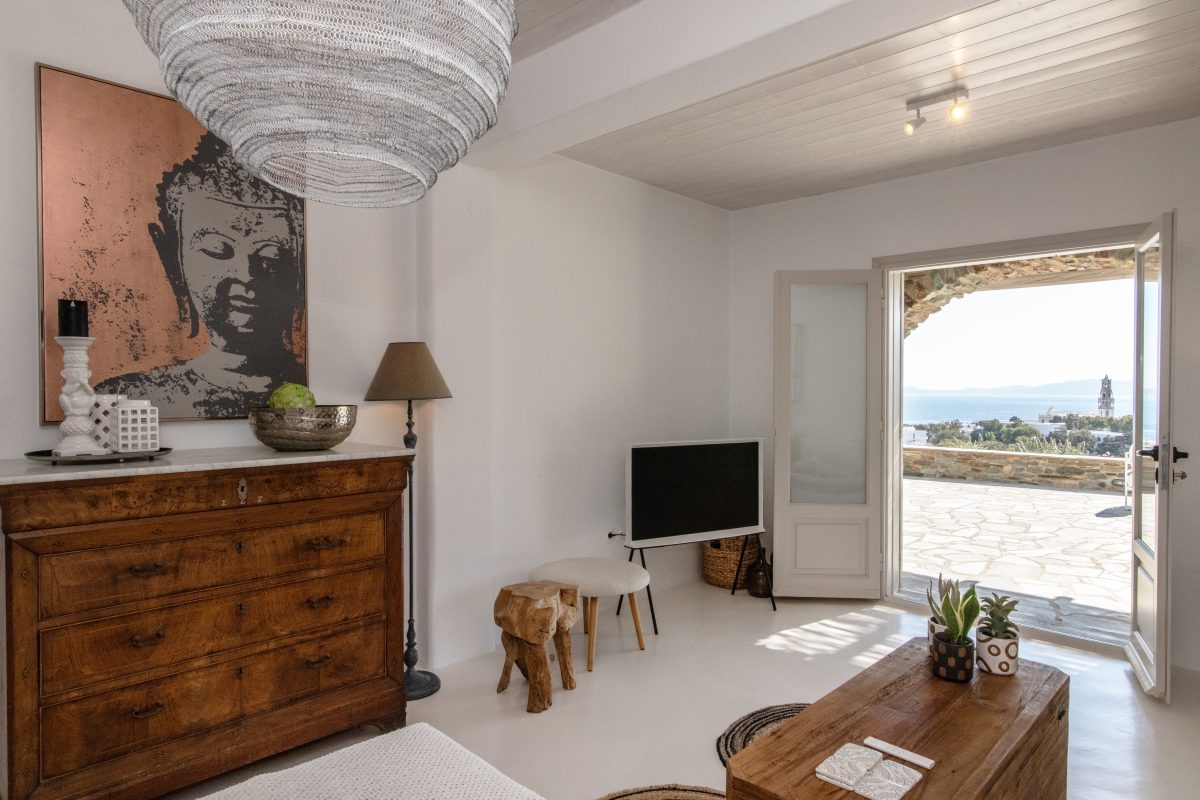
Here, simplicity has existed long before it became an aesthetic. Stone, marble, wood and whitewashed walls. Strong Cycladic light. Handmade details. Natural imperfections. Materials that become more beautiful as they age.
But Azalay was never intended to become another version of the expected “island interior.”
There is more to the Cyclades than blue and white.
We are drawn to warm woods, deep colours, unusual forms, expressive ceramics, natural textiles and pieces with personality. We love seeing something contemporary against an old stone wall, a playful object on a serious piece of furniture or an unexpected colour interrupting an otherwise quiet room.
For us, those contrasts are often what make a space interesting.
Things We Would Live With
There isn’t a complicated formula behind what enters Azalay.
We ask ourselves something much simpler: would we want to live with it?
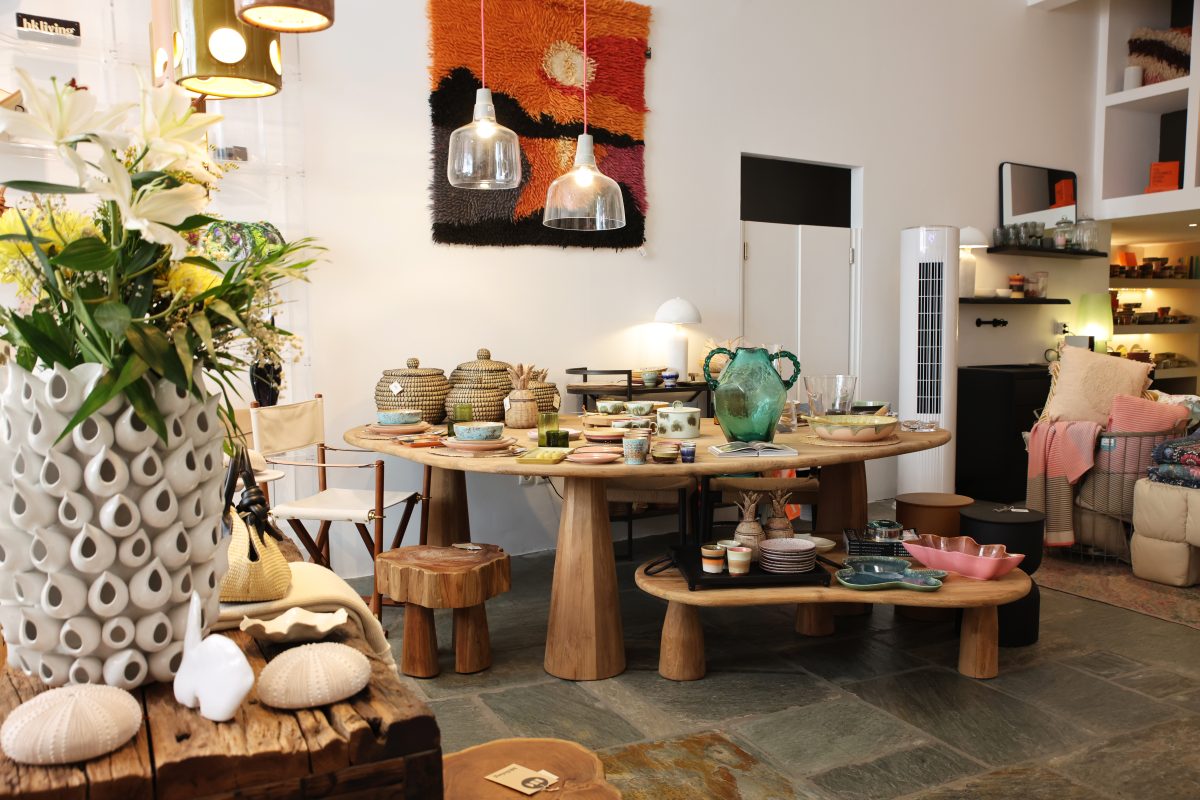
Azalay brings together furniture, lighting, ceramics, textiles, art, books and objects from different designers, makers and collections.
Some pieces are quiet and functional. Others are expressive, playful or a little strange. Those are often the ones we like most.
They don’t necessarily belong to the same style — and that’s intentional.
After years of working on real homes and hospitality spaces, one thing has become very clear to both of us: the rooms people remember rarely look as though everything was ordered from the same page of a catalogue.
They have layers.
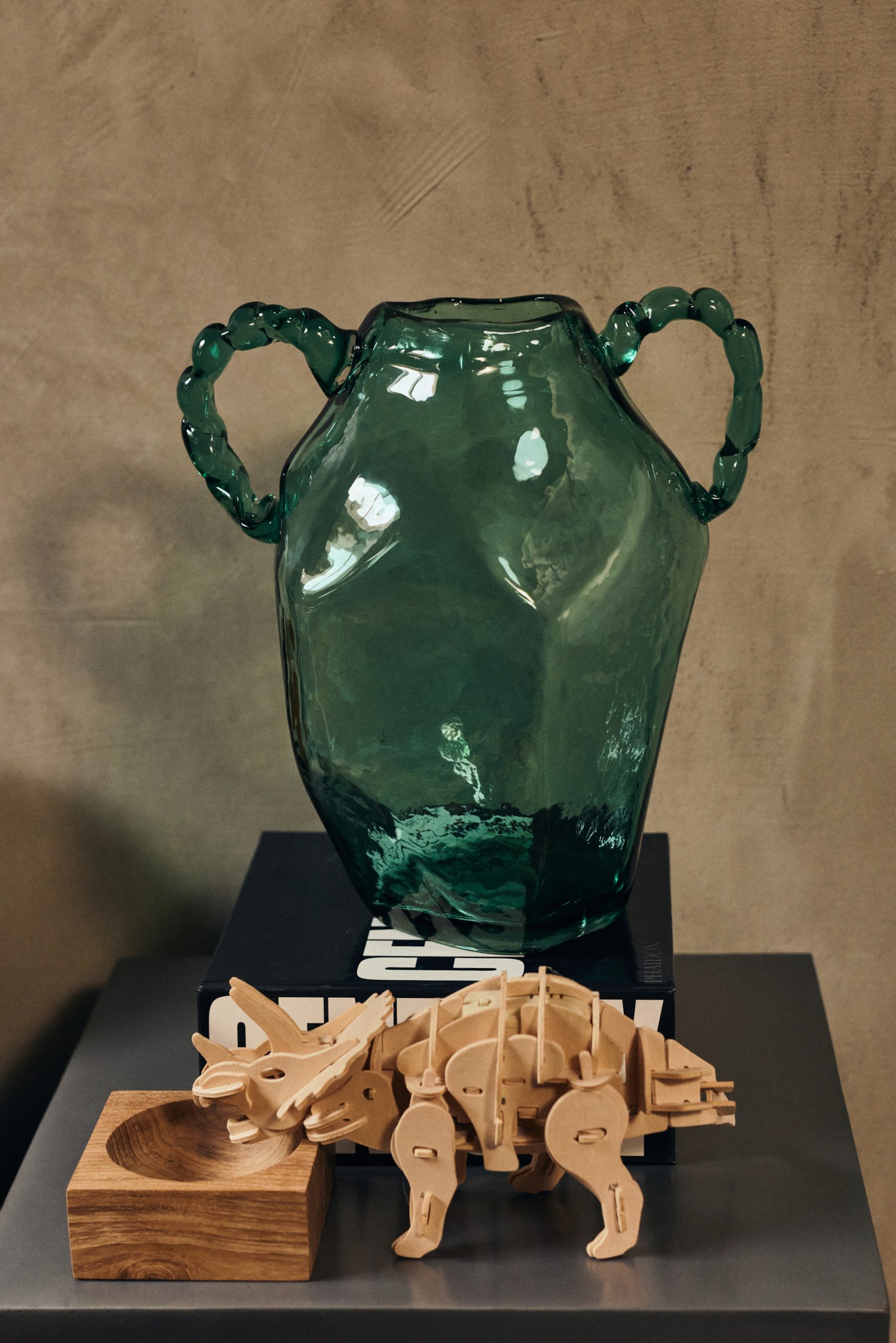
A sofa will be lived on. A mug will become someone’s favourite. Books will move from shelf to table. A lamp can be useful and sculptural at the same time. A vase doesn’t necessarily need flowers to deserve its place in a room.
And sometimes an object has absolutely no practical purpose other than making you happy that it’s there.
We think that’s a perfectly good reason to keep it.
Collected, Not Decorated
Perhaps this is the idea that connects George’s experience in hospitality, Christos’ years in furniture and interiors, and everything we want Azalay to become.
Good spaces aren’t created in a single afternoon.
They develop.
Something new sits next to something inherited. A carefully chosen piece of furniture shares a room with an object discovered unexpectedly while travelling. Different periods, materials, colours and stories begin to coexist.
There is something personal about that kind of imperfection.
That’s why we think of Azalay less as somewhere you come to “finish” a room and more as somewhere you might find something for it.
One piece today. Something completely different a year from now.
A home doesn’t have to be finished. It can be collected.
From Chora, Outwards
Azalay Chora is the first physical expression of that idea.
It’s a meeting point between George’s world of hospitality, Christos’ world of furniture and interiors, the character of Tinos and the designers and objects we discover beyond the island.
The e-shop simply allows that little store in Chora to travel further.
Whether something eventually finds its home in a Cycladic house, an apartment in Athens or somewhere else around the world isn’t really the point.
What matters is that when it gets there, it feels like it belongs to you.
Welcome to Azalay Chora.
Objects, furniture and things worth keeping.

